




Years ago, I made a mosaic pot with a friend during a delightful day of crafting and conversation. Ever since then, I’ve been saving the shards whenever I’ve broken a plate or ceramic vase, with the idea that I someday would make more pots. Someday arrived this spring, when I was starting to feel the pressure of juggling several writing projects with nearing due dates, I decided it was time to pull those pieces out of the garden shed and use them to pretty up some empty plant pots — and to let my busy mind relax and refresh.
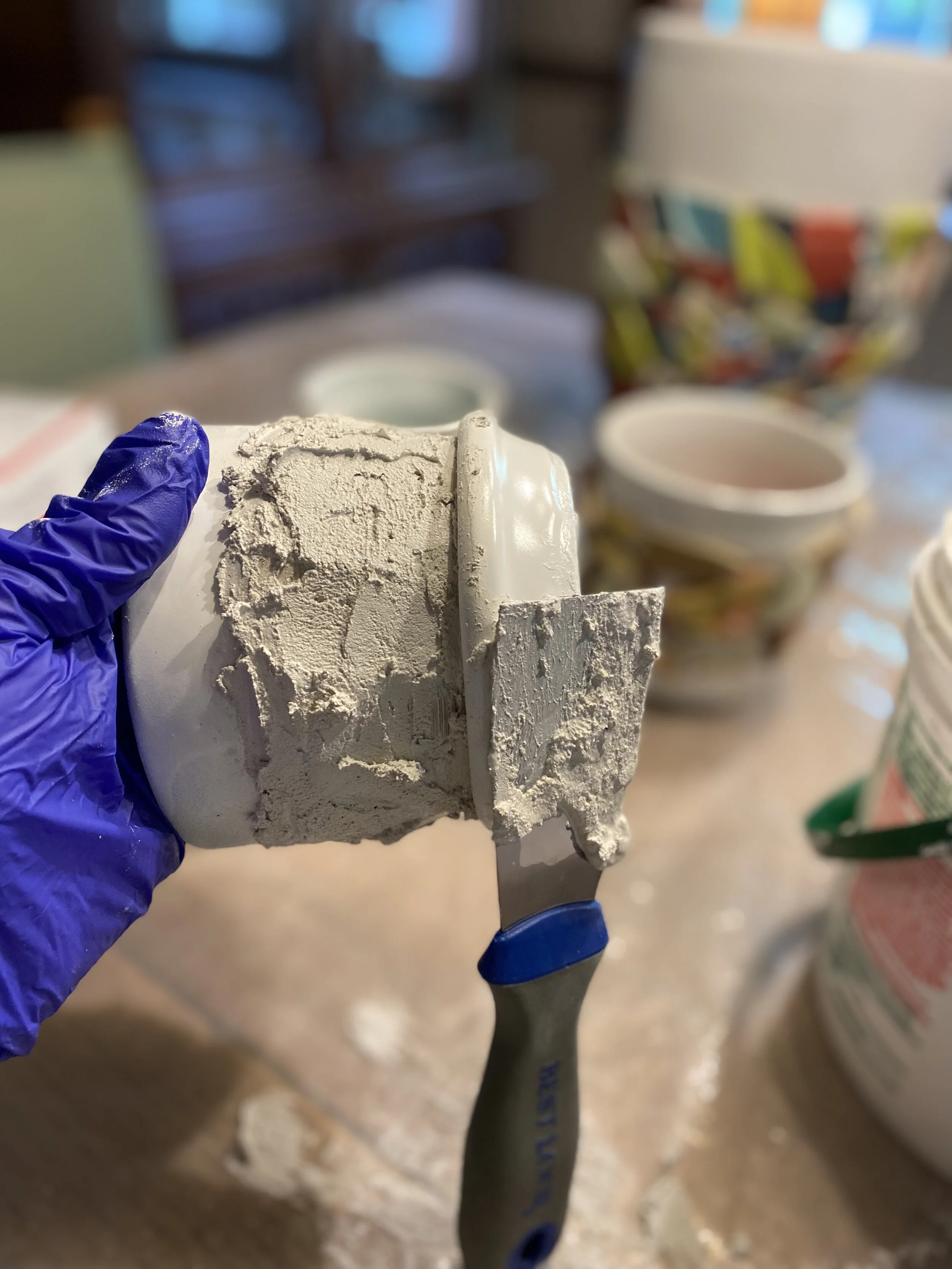
Over a few weeks, I sorting the pieces by color, decided on combinations that pleased my eye, glued shards to the pots (mostly green and brown pots that I spray-painted a crisp white for a uniform background), grouted the pots, sealed them and began filling them with plants.
Research has shown that creating or tending things by hand enhances mental health and happiness. If you want to be a better writer, put down your pen (or shut down your computer) and pick up a glue gun, paint brush or other tool that allows you to be creative in a hands-on way. Getting messy with your hands can help you clean out the cobwebs in your brain, improving your mindset for when you’re ready to get back to your desk.
A few tips for creating with your hands so you can feel happy and productive and ready to get back to your writing, whether you’re working on a novel or a piece of content for a website:
Play.
This isn’t your livelihood. This is a craft you enjoy or want to learn. Let go and have fun. You don’t need to make a masterpiece. Just make something, preferably away from the computer (unless digital drawing makes you happy). Get your hands dirty. Move from thinking to physically doing something.
Get out of your head.
The unfamiliarity that comes with trying a new craft or picking up an old craft that you haven’t worked on in awhile (why hello, dusty knitting needles) will force you to focus on that project. You’ll be so engrossed in following directions and making creative choices, you won’t be thinking about whatever issues you’ve been struggling with in your writing. You may even find that the solution to your writing problem, such as figuring out an intro for your article, may just “suddenly” present itself when your mind has been otherwise occupied.
Don’t aim for perfect.
If you’re a recovering perfectionist like me, it can be tough to not judge whatever crafty thing you make, but try. Letting go of the need to be perfect is liberating. Practice by permitting yourself to create less-than-perfect art. Are my new mosaic pots perfect? Not by a long shot. Did I enjoy the process of making them? Absolutely. Am I going to open an Etsy shop to sell mosaic pots? No. For me, this is meant to be fun, not a revenue stream. And that’s OK.
Bask in your tangible achievement.
Looking at my new pots while I’m relaxing on my porch fills me with a sense of accomplishment: I made those. With my very own hands. Unlike sentences typed in a Pages or Word document on my computer screen, these pots, imperfect though they are, are a record of my achievement that I can hold in my hands.
Get back to work.
Don’t use working with your hands as a procrastination crutch. Have your fun, enjoy using your brain to think creatively in ways that are different from your usual patterns and then let yourself get back to your writing, with a fresh perspective.